
Call Us+91 82090 86201
WhatsApp+91 82090 86201
The Camel City of Rajasthan — Junagarh Fort, Karni Mata Temple, camel safaris & famous Bikaneri sweets. 330 km from Jaipur.
Bikaner is one of Rajasthan's most underrated destinations — a magnificent desert city that most travelers skip in favour of its more famous neighbours, yet which offers some of the most rewarding heritage experiences in the entire state. Founded in 1488 by Rao Bika, a son of the founder of Jodhpur, Bikaner grew into a powerful kingdom that became famous for its military prowess, its skilled camel corps, and its extraordinary architectural achievements. Today, Bikaner rewards visitors with a magnificent fort, remarkable temples, a unique cultural heritage, and some of the finest food in Rajasthan.
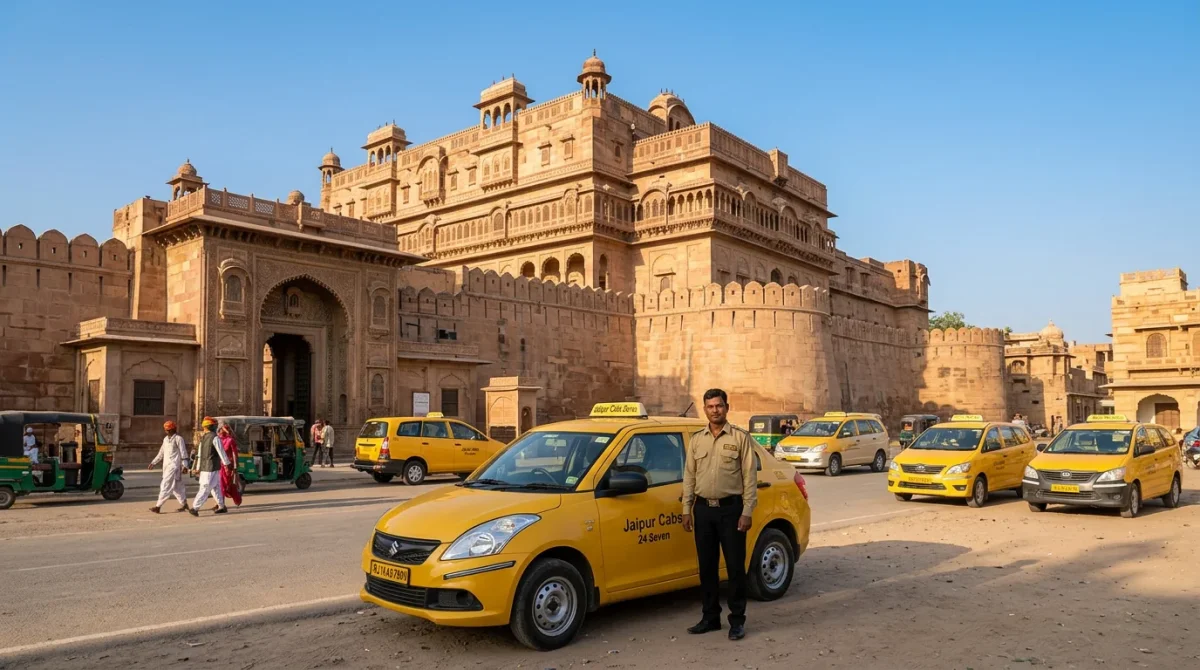
Unlike most Rajasthan forts which are built on hilltops, Junagarh Fort stands on level ground in the heart of Bikaner — and it has never been conquered. Built in 1588 by Raja Rai Singh, this massive sandstone complex contains 37 palaces and temples built over successive generations by different Bikaner rulers, each adding their own architectural flourishes to create an extraordinary layered complex. The contrast of red sandstone and white marble, the intricate jali (lattice) screens, and the beautifully painted Anup Mahal (an audience hall covered in gold leaf and glass inlay work) make Junagarh one of the finest fort-palace complexes in Rajasthan.
The fort museum houses an outstanding collection of royal artifacts including a World War I biplane (the Bikaner rulers fought alongside the British), elaborate howdahs (elephant seats), royal weapons, and a remarkable collection of Sanskrit and Persian manuscripts. The Prachina Museum within the complex has an excellent exhibit of royal costumes, household objects, and decorative arts.
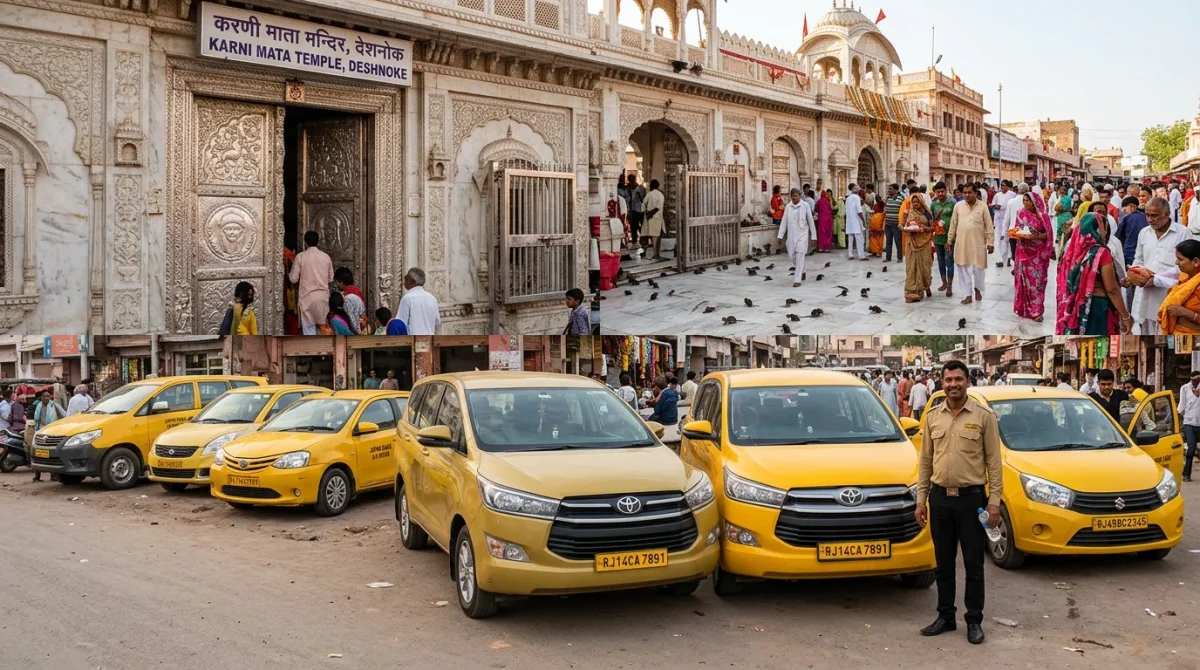
Located 30 km from Bikaner in Deshnoke, the Karni Mata Temple is one of India's most unusual and fascinating religious sites. The temple is home to approximately 25,000 rats (called kabbas — holy rats) that are considered sacred and are believed to be the reincarnated devotees of Karni Mata. Devotees consider it auspicious to have the rats run over their feet, and spotting one of the rare white rats among the thousands of brown ones is considered exceptionally lucky. The rats are fed milk, grain, and sweets offered by devotees, and the atmosphere — while initially startling — is genuinely fascinating. Marble floors, ornate silver gates, and the presence of thousands of rats in a sacred temple is an experience entirely unique in the world.
Built in the early 20th century by Maharaja Ganga Singh, Lalgarh Palace is a magnificent Indo-Saracenic structure combining Rajput, Mughal, and European architectural elements. Built entirely in red sandstone with breathtaking filigree lattice work on its windows and facades, it is one of the finest examples of early 20th-century palace architecture in Rajasthan. Part of the palace now operates as a heritage hotel (Laxmi Niwas Palace), allowing visitors to experience staying in a royal setting. The Sadul Museum within the palace complex has an excellent collection of vintage photographs, shikar (hunting) trophies, and personal belongings of the Bikaner royal family.
Bikaner is the camel capital of India. The National Research Centre on Camel (located 8 km from Bikaner) is the only institution of its kind in Asia — a government research facility that studies camel genetics, breeding, and products. Visitors can tour the facility, see hundreds of camels of different breeds, and purchase camel milk products including camel milk ice cream (genuinely delicious). The annual Bikaner Camel Festival in January is one of Rajasthan's most spectacular events — camel races, camel dances, camel beauty pageants, and folk performances attract thousands of visitors.
Bikaner has one of the most celebrated food cultures in Rajasthan. The city is particularly famous for its bhujia (crispy fried gram-flour noodles) — Bikaneri bhujia is so prized that it has GI (Geographical Indication) tag protection. The narrow lanes of the old city are lined with shops selling freshly made bhujia, papads (lentil crackers), rasgullas (cottage cheese sweets), and the uniquely Bikaneri mishri mawa (a rich sweet made from khoya). A food tour through the old city lanes is essential — ask your driver to take you to Bhikharam Chandmal (the oldest bhujia shop, established 1860) and Bikanervala's original Bikaner outlet.
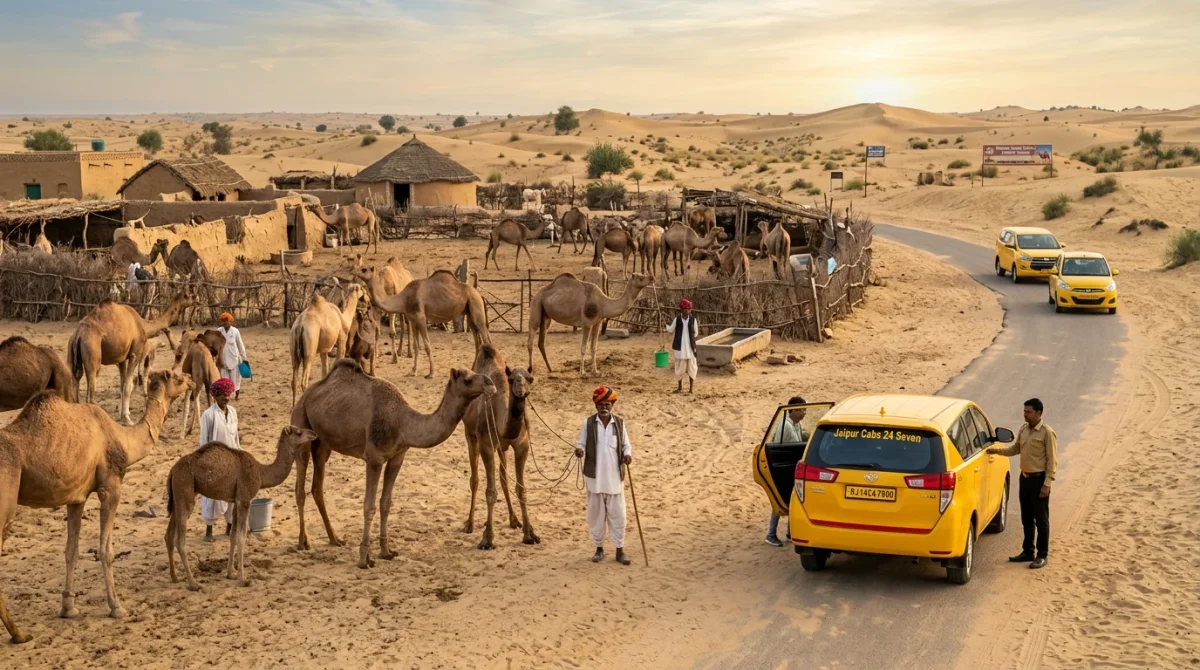
Day 1: Depart Jaipur early morning. Drive to Bikaner (330 km, ~5 hours via NH-11). Afternoon: Junagarh Fort (allow 3 hours for the full circuit). Evening: Old city food tour and Lalgarh Palace exterior. Overnight Bikaner.
Day 2: Morning: Karni Mata Temple at Deshnoke (30 km). National Research Centre on Camel. Afternoon: Lalgarh Palace Museum. Shopping for bhujia and sweets. Depart for Jaipur, arriving by late evening.
Discover Rajasthan's hidden gem — forts, rats, camels and bhujia. Book today.
Trusted by Leading Organizations & Valued Clients